


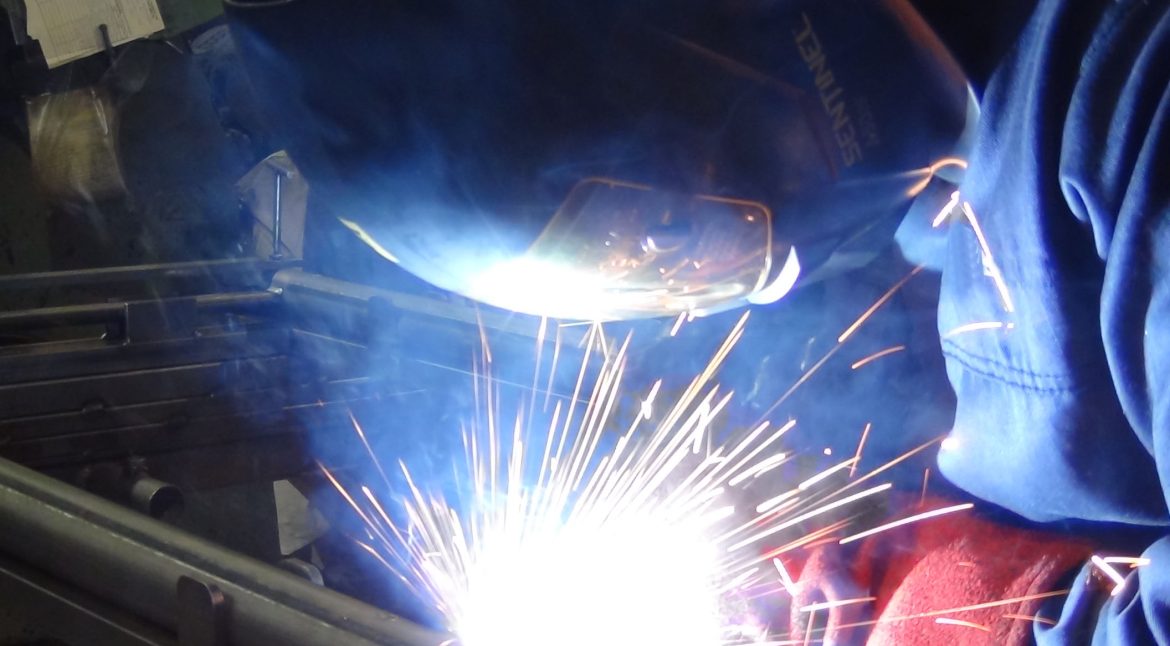
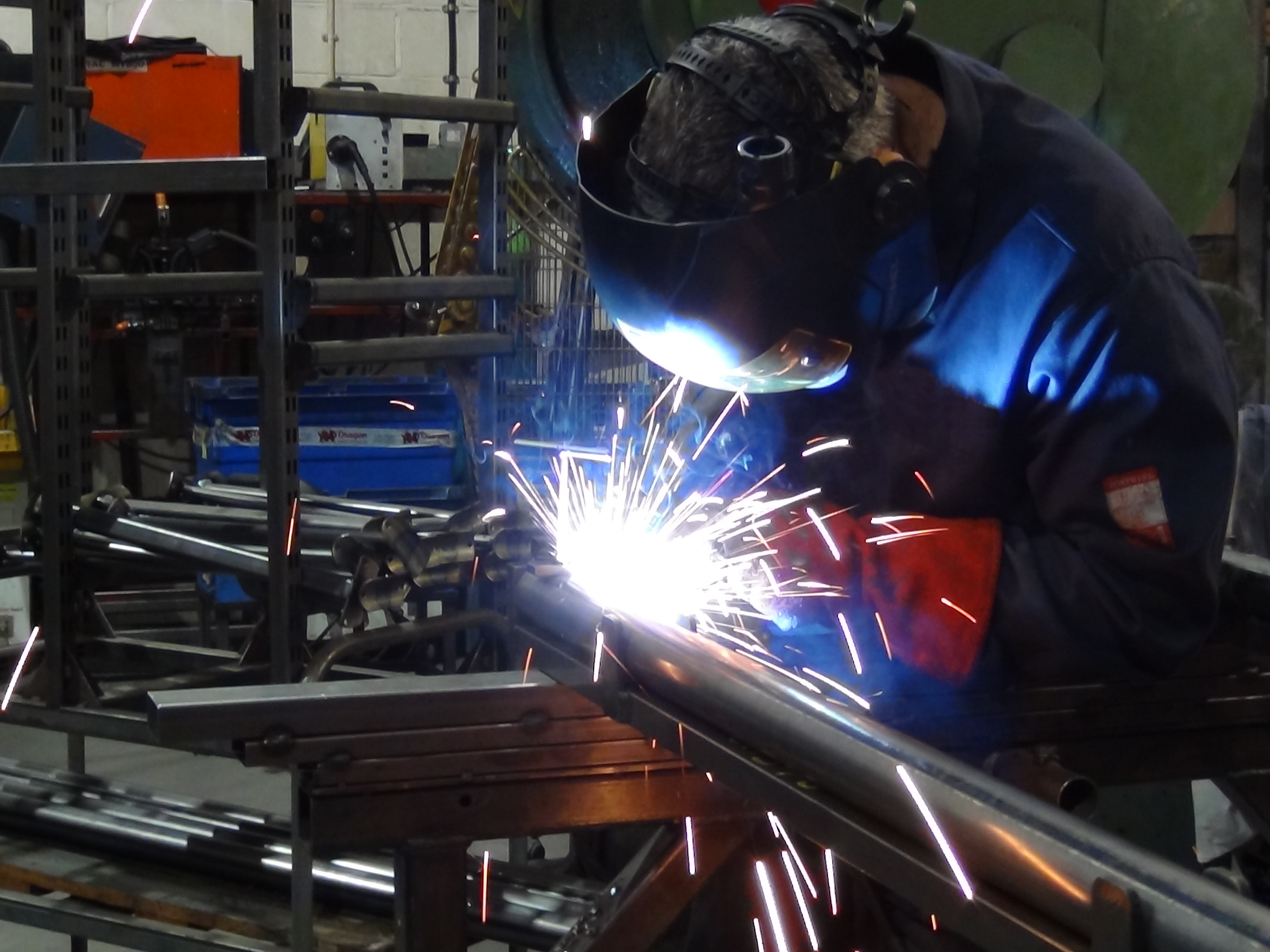
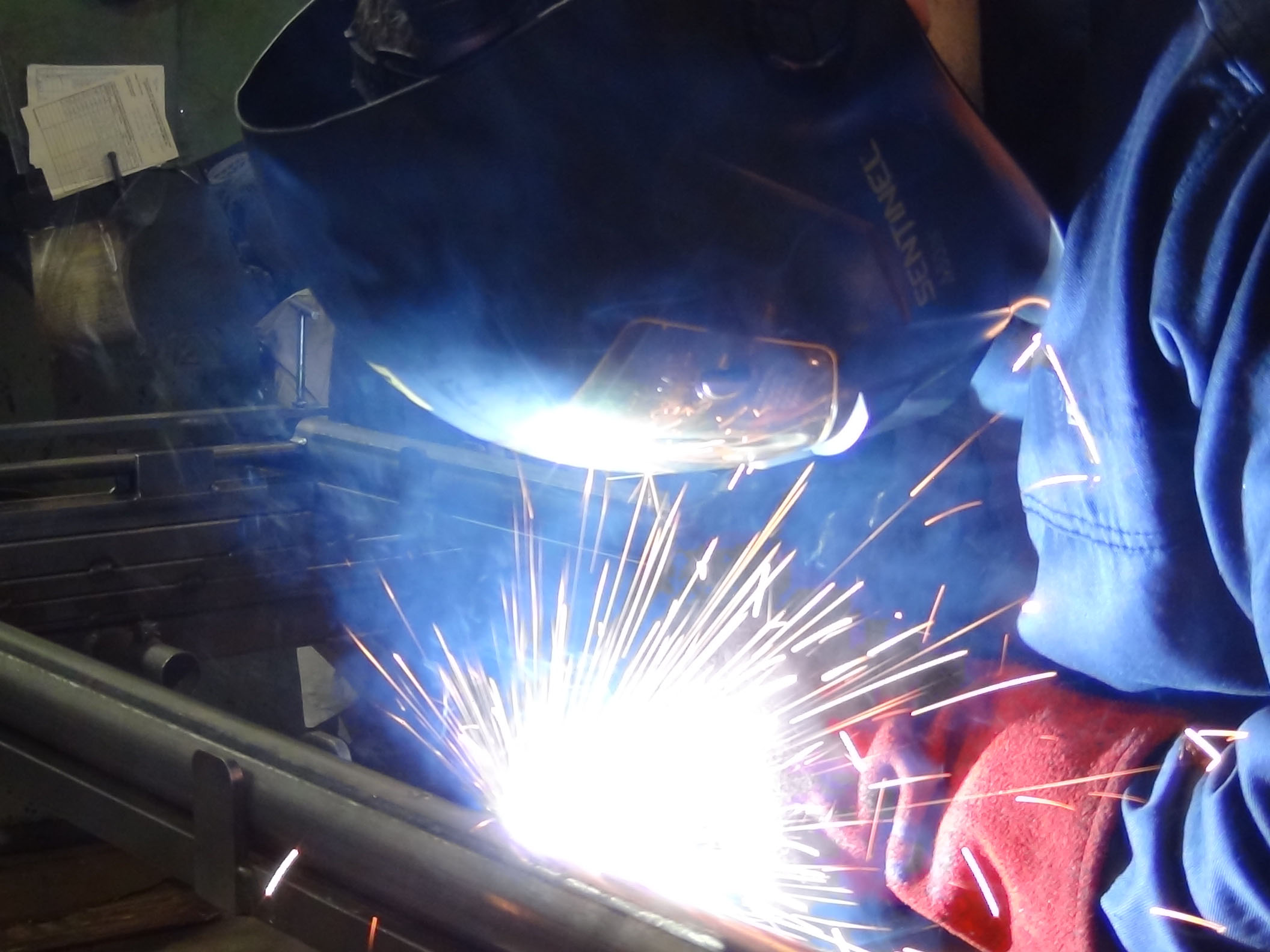
When it comes to welding large and heavy components together we recommend MIG welding. While it is not as precise as TIG welding, it is highly cost effective. Robert Timmins, Dragon Welding and Fabrications General Manager, manages an experienced team of welders who create a wide range of components across many industry sectors. “We have begun constructing components for a leading manufacturer of balustrades in the construction industry,” reveals Robert. “The project uses a combination of MIG and TIG welding. The larger components benefit from MIG welding as it’s fast, less precise, but still gives a robust join that can be relied upon. MIG welding is much less skilled and precise than TIG welding which means skilled welders can complete MIG welding jobs much faster. It also means that we can use less experienced welders on the large components and more experienced welders on the TIG welding elements of the project when precision and good aesthetics are important,” explains Robert.
Managing welding resource
” Robert adds.
When components need precision welding and a great looking finish that may go onto be powder coated, then TIG welding is the welding technique of choice. However, large thick metal pieces, from stainless steel through to aluminium, where a solid join is needed and the finished look is not so critical MIG welding is the most competitive and quickest welding technique.
“If you are doubt about which welding technique you need, we can bring advice and experience to your project. We back all our projects with first class customer service that includes a discussion about the objectives of your project at the initial stages. Materials, component size and function all contribute to the determining which welding technique to use that will create a quality component to time and budget.” concludes Robert.